Mini Fluffy Cows
“Mini fluffy cow” is the nickname for Highland cattle and their miniature cousins – the shaggy, gentle cows that have taken over social media. Here’s what they really are, how big they get, how to care for them and where to buy one in the UK.

What are mini fluffy cows?
The term “mini fluffy cow” is usually used to describe Highland cattle. Highlands aren’t technically a miniature breed, but their thick, long double coat gives them their famous fluffy look, and they are smaller than many other cattle breeds.
Key characteristics
- Origin
- The Scottish Highlands
- Size
- Around 3–4 ft (90–120 cm) at the shoulder, weighing 500–1,000 lb (about 225–450 kg)
- Coat
- Long, thick double coat in colours including red, brown, black and blonde
- Temperament
- Gentle and docile
Are Miniature Fluffy Cows Real?
Yes – Highland cattle are a real breed with the distinctive fluffy appearance people associate with the name. They weren’t originally bred to be small, but their size and coat earned them the nickname.

Mini Fluffy Cows Size: How big are mini cows?
Mini Highland cattle aren’t truly miniature: they stand around 3 to 4 feet tall at the shoulder and weigh 500 to 1,000 lb (about 225–450 kg). Teacup mini fluffy cows range from under 36 inches to 48 inches (about 90–120 cm) – about the size of a large dog.
That’s smaller than many other cattle breeds, but they are still large animals that need plenty of space and care. Despite their size and gentle nature, they’re hardy animals that make excellent companions or additions to a smallholding.

Lifespan of a mini Fluffy Cow
The average lifespan of a mini fluffy cow is 15 to 20 years with proper care. That means regular health checks, good feeding, plenty of space to graze and the company of other cattle.
Feeding Miniature Fluffy Cows
They eat the same as full-sized cattle, just less of it: grass or hay, with fresh water always available. Mini cattle typically eat 2–4% of their body weight a day; beef types like Highlands sit at the lower end.
Highlands are natural grazers, so their diet should be mostly grass and hay. They may need minerals or supplements too – ask your vet or an experienced breeder.
Where to buy a mini fluffy cow?
Owning a cow, even a miniature one, is a big commitment that needs knowledge, time, money and the right facilities. When you’re ready, you can buy a mini fluffy cow from Casilia Ranch, our family farm in Ross-shire.
Choose a breeder who puts the health and wellbeing of their animals first. Not sure which size is right for you? Read our guide to miniature cows vs standard cows.
Health considerations
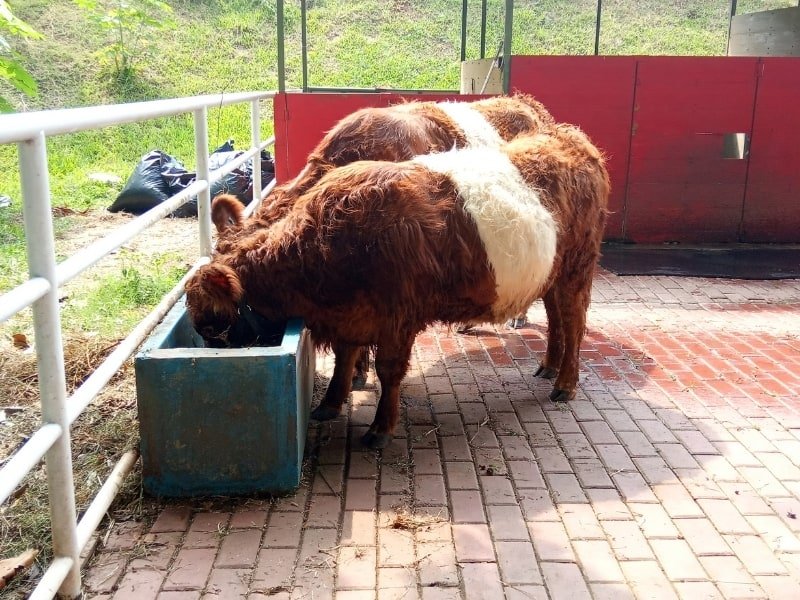
Like all animals, mini fluffy Highland cattle can suffer from certain health conditions, so regular veterinary care is essential.
They need good pasture management, adequate shelter and proper feeding. Highlands cope with a wide range of climates, including conditions other breeds find hard.
If they’re kept in sheds, give them enough room to move comfortably alongside feed troughs and water. On pasture they do well on rough forage, topped up with hay and mineral blocks in winter or when grazing is poor.
Plan regular health checks, vaccinations and worming with your vet. Their shaggy coat looks after itself, but brushing during the shedding season helps, and it’s a good chance to check for parasites.
Is a mini fluffy cow right for you?
Benefits or Advantages of Owning a Mini Fluffy Cow
- Companionship: Highland cattle can be friendly, social animals that make lovely companions.
- Land management: They graze and help manage land, which is useful if you have a larger property.
- Unique appearance: Their long, thick coats and distinctive horns make them a joy to look at.
- Learning: Keeping them teaches you about different breeds, their history and their role in farming and conservation.
- Appreciation for nature: Caring for them builds a deeper respect for animals and responsible husbandry.
- Supporting good breeders: Buying from ethical breeders supports responsible breeding practices.
- Meat or milk: Some people keep them for meat or milk, although most owners keep them as companions.
Disadvantages of Owning a Mini Fluffy Cow
- Commitment: They live 15–20 years and need proper care, housing and food for all of that time.
- Cost: The purchase price can be high, and feed, vet care, fencing and shelter add up.
- Space: They need room to graze and roam, so they aren’t suited to small gardens or urban homes.
- Care and expertise: Like any large animal, they need knowledgeable care: diet, herd management and health.
- Paperwork: In the UK you need a County Parish Holding (CPH) number and a cattle passport registered with BCMS. We arrange the passport for every calf we sell.
- Safety: Even gentle cattle are large and powerful and can hurt people or other animals if handled badly.
- Ethics: Breeding for very small size can bring health problems, so choose a breeder who puts welfare first.
Weigh up the responsibilities carefully before buying any animal. Responsible ownership means putting the animal’s wellbeing first and meeting all its needs for its whole life.
Ready to meet your mini fluffy cow?
See the calves available now, or send us an enquiry and we’ll be in touch within 24 hours.